Tamuz is an urban kibbutz
- The principal idea guiding the urban kibbutz is the creation of a community that is a meaningful social and cultural framework for its members.
- Founded in 1987 and located in Beit Shemesh, a small town 25 kilometers west of Jerusalem.
- Tamuz aims to be an integral component of the local community of Beit Shemesh.
- Thirty-five adults and the same number of children live on the Kibbutz.
- Tamuz is a framework for ongoing dialogue and continual formation. We see our community as a way of seeking "Tikun Olam"- ("a better world").
-
Kehilla – a non-profit organization
Members of the Kibbutz and other residents of Beit Shemesh established "Kehilla" in 1996. Kehilla seeks to develop projects in the field of Jewish pluralism, social involvement and dialogue between the different populations in the area. These projects express our commitment to the values of Study (Talmud Torah), Charity (Tzedakah) and making the world a better place (Tikkun Olam).
To realize these values we aim to:
Form study groups for adults and youth with the purpose of generating dialogue using Jewish source material as the basis for discussion.
Cultivate community frameworks in Beit Shemesh and it's surrounds. These frameworks contribute to the empowerment of residents and serve to counter the processes of alienation and disintegration of social frameworks in Israeli society.
Develop a cadre of leaders who are dedicated to the values of democracy, civil society and Tikkun Olam.
Develop non-Orthodox Jewish identity that draws on Jewish culture of all periods, and togenerate new texts and Jewish ceremonies appropriate to our time.
To promote an on-going dialogue between Israeli Jews and Jews from the Diaspora.
To assist weak groups in the society through community organizing and self-help.
Today, in the year 2006 there are 3,000 people participating in Kehilla programs, half of them on a weekly or daily basis.
- Nivheret – youth building a better society
- Community Beit Midrash
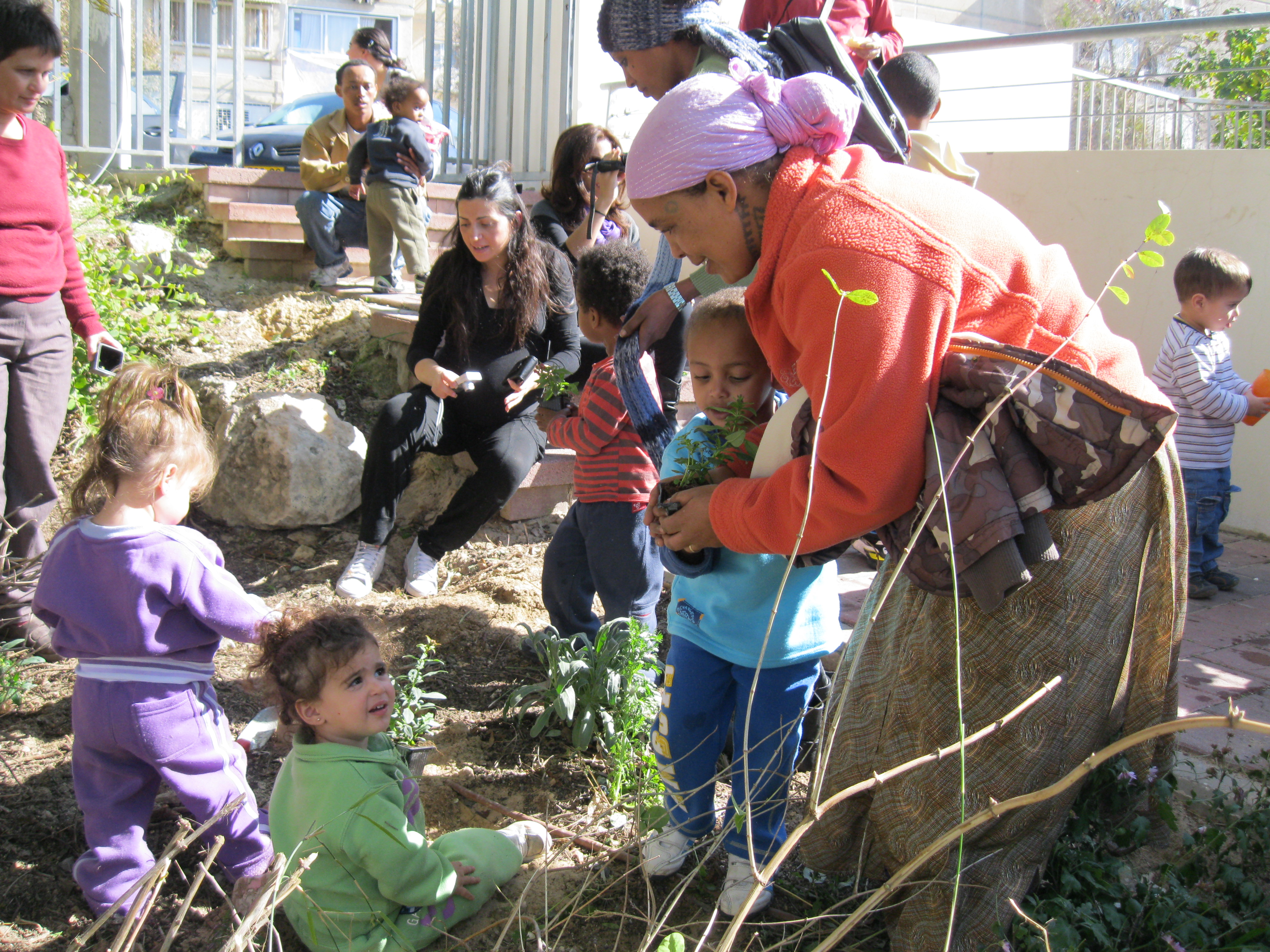
- Pre-school program & integration of Ethiopian children in the preschool
- Citizen's Rights Center
- Daycare program for Children at Risk
- Community Bridges
- Womens' Groups
- Learning centers in Beit Shemesh libraries
- Children's library – Hebrew and Amharic
Nivheret
"Nivheret" (a Hebrew acronym for "Youth Building a Better Society") is a leadership program for youth who are dedicated to Jewish Continuity in two dimensions – Jewish Pluralism and Social Responsibility.
The program consists of students aged 14 – 17 years old. They meet once a week on their school campus with teachers trained by Kehilla.
500 students participate in the program annually through 25 schools.
Nivheret deals with experiential learning through workshops on questions of equality, social justice, society, and economics and Jewish-Israeli identity.
Students from both religious and secular schools participate in Nivheret. A central component of the education program is to create a meaningful dialogue between the religious and non-religious groups. Through this dialogue we express the values of Jewish Pluralism and mutual respect.
The goal of Nivheret programs is to create a cadre of youngsters who are dedicated to social change in Israel in the fields of pluralism and social justice.
Community Beit MidrashThe Community Beit Midrash was established in 1997.
The Beit Midrash's goal is to develop new models for community living and Jewish culture in Beit Shemesh and the vicinity. It is a place for Torah study, a continuing education center for teachers and an institution geared to influencing and actively participating in the local community.
The Beit Midrash has a few programs:
- A Program for women – orthodox and non- orthodox women meet weekly to study Tora together and create a new partnership and dialogue
- A young adult Beit Midrash- for youngsters who are doing their national service or volunteer in the community for one year before joining the IDF
- Open lectures and evenings of study for all
.Forty five children age 1-3 particupate in the program
One third of them are children from families who immigrated from Ethiopia to Israel in the last 5 years
Educational principles
We consider the main principle of educational work to be the interaction between the children and the educators as well as the interaction between the children themselves, with the help of the educators.
To put the above in practice, we adhere to a strict ratio of children to educators.
We believe the job of the educators is to enable the children to encounter different experiences and to serve as an intermediary for each child during the learning process. These experiences include working with different materials, activities, a daily excursion and games in the yard.
Another guiding principle is that children do not learn a concept or a skill in one day. Learning is a long process of interacting with a concept at different times, which enables the child to learn and to build on the concept. In order to support a child's learning, it is necessary torepeat the same activity over and over again. An example of this is when we bake challah for Shabbat or work with the same material once a week, we provide the basis for the vocabulary, concepts and skills connected to that activity.
Integration of Ethiopian children in the preschool
Within Beit Shemesh there are approximately families who have arrived in the last five years from Ethiopia. From these families, there are approximately 60 pre-school age children aged 1 – 3.
The Ethiopian community in Beit Shemesh live in a concentrated area and tend to send their children to the Early Childhood centers that usually consist of only Ethiopian children. This produces difficulties in acquiring the Hebrew language and integration into Israeli society.
We believe that Ethiopian children could be educated in an integrated culturally- pluralistic framework. This framework should not demand from the new immigrants to forego their culture and language for the sake of Israeli culture and the Hebrew language.
Our Objectives
- To teach the Hebrew language while legitimizing and recognizing the Ethiopian language (Amharic) and the Ethiopian culture. Placing an emphasis on involving Western cultural tools such as different technologies and literacy development.
- To empower Ethiopian children and their parents by helping them to participate in the educational activities of the Early Childhood Center as a way to cope with the immigration crisis.
- To make the Ethiopian parents our partners in the quest to integrate their community.
- To include Ethiopian careers as role models to the children and as a liaison with the parents.
The Citizen's Rights Center was opened in the year 2000. It is located in downtown Beit Shemesh.
The main goal of the center is to create a strong, organized community of citizens who are dedicated to Beit Shemesh. There are two ways in which to achieve this goal.
- To provide citizens with information on issues that affect their day-to-day lives; health, education, housing, social security, and unemployment. The center provides free information on rights and services to community members and encourages them to pursue these avenues to achieve a favourable outcome.
- To help organize community members to influence policy change.
A lawyer who is assisted by volunteers supervises the center. The volunteers are residents of Beit Shemesh and surrounding Kibbutzim and Moshavim. They are active in advising clients, organizing discussion groups, and developing new programs. In addition, the center has professionals who volunteer in their area of expertise and provide legal advice where necessary.
The Center is open four mornings and one afternoon per week.
Daycare program for Children at RiskThe daycare program is an educational framework that works within the community after school hours, five days a week.
The program provides support and serves as a partial family replacement for children who come from malfunctioning families. We assist children who are dealing with emotional problems and behavioral issues. The program provides the children with favorable conditions in the afternoon without cutting them off from their homes. The program is special in the care it gives children in full cooperation with the parents and in conjunction with social, care, and educational factors.
Target population:
- Children aged 6 – 12 years of age;
- Children with emotional, educational and/or developmental needs;
- Children lacking suitable family role models;
- Children suffering from abuse or neglect by their parents;
- Children who are away from home much of the day, alone , or wandering aimlessly about;
- Children who were not accepted into the foster care program.There are 30 children participating in the program.StaffingThe professional staff is composed of a social worker, two group managers, three youth workers, a housekeeper and an educational program director.Basic needsThe children receive their basic needs; lunch, snack, dinner, naptime for those who need it and showers.Travel: Children are collected from school and taken to the clubhouse, and at the end of the day, taken home;Educational and social activity; Preparation of homework while addressing the problems of each child. Teaching good study habits.Enrichment: Clubs, sports, hikes, group discussions. Some of the activities are open to all the children while some are directed at other groups depending on the treatment plan as determined by the educational director.Treatment Activity: A personal treatment plan is prepared for each child, according to his or her needs, as determined by all staff involved.
The program aims to form a dialogue between Israeli youth in their post high-school, pre-army year from both religious and non-religious sectors of society. The one year program includes joint study sessions one day a week combined with community volunteer work for the remainder of the week in educational and community programs such as teaching Jewish heritage and rituals in elementary schools. Subjects studied are based on leadership, Jewish identity, Jewish pluralism and teamwork as a base for development in the group views on issues of Israeli society, religious diversity and tolerance. The program emphasizes the value of learning and teaching pluralistic Judaism as a way of developing mutual cooperation. It influences change in the wider community by educating the youth prior to army service so as to create a cadre of young Jewish activists of social tolerance and diversity.
In the 2004-2005 school year 25 youngsters participate in the Study sessions, 12 of them volunteer in Beit Shemesh. Those 12 volunteers work with 200 children on a weekly basis.
Childrens library – Hebrew and Amharic In order to cope with the cultural differences between western culture and Ethiopian culture, we place a special emphasis on the use of technology and literacy development. As an example, we use photography for documentation of the activities of the children. With the aid of the pictures the children learn to recall their previous experiences. The photos are also used as a communication tool with their parents.Literacy development is achieved by exposing the children to different kinds of books; picture books, children's books, art books etc..With the generous support of Ms. Rhoda Mancher from the Jewish federation ogf Greater Washington we built a library of 50 books, translated from Hebrew to Amharic.In the books the Amharic translation appears below the Hebrew text. Each page is re-covered in a plastic film once the translation is added. As there is a difficulty with some of the parents to read Hebrew, each book is accompanied by an audio-recording in order for the children to listen to the book together with their parent.The books are read to the children by the staff, and they are also able to look at them independently. In addition, the books are available to the families to borrow free of charge.Friends of Kehilla
We are proud of what we do. With your help we can do more.
We are thankful to 38 Friends in North America who made a long term commitment to support Kehilla and joined "Friends of Kehilla" during the last year.
Prof. Nathan Cogan
Chairman of Advisory Board for Friends of Kehilla in the USA
PO Box 1732
Portland OR 97207
Partners and supporters
- The Ted Arison Family Foundation
- Aroma Espresso Bar – Beit Shemesh
- The Al Roadburg Foundation
- The Glencore Foundation for Education and Welfare
- The Gimprich Family Foundation, Inc.
- Helen Bader Foundation, Inc.
- Friends of Kehilla in the United States
- Isabel and Zanvyl Krieger Foundation
- The Steinhardt Family Foundation
- Bank of Jerusalem
- Ministry of Labor and Welfare
- Ministry of Absorption
- Ministry of Education
- United Kibbutz Movement
- Knesset Fund for the Needy
- The Israeli Ministry of Justice Committee for Allocation of Funds and Legacies
- Jewish Agency for Israel – Partnership 2000 – Beit Shemesh – Yehuda Plains – Washington – South Africa.
- Matan – Your way to give
- The Oran Foundation
- Social Security fund for children and youth at risk
- The Pratt Foundation, Australia
- The Rapoport Family Foundation
- The Schussheim Foundation
- Tzav Pius Organization
- UJA – Federation of New York
- Jewish Federation of Greater Los Angeles
- Jewish Women International
- Jewish Federation of Greater Washington
- Yad b'Yad – NCJW's Initiative to Nurture Knowledge
Contact us
Kehilla Office
Tel. : 972-2-9900125
Fax : 972-2-9900100
E-mail : kehilla@tamuz.org.il
Kibbutz Tamuz,
3 Yehuda Ha'Makabi St.
Beit Shemesh
99025
Contacts
President – Osnat El-Natan
General Manager – Yair Alberton – Mobile phone : 972-52-376-8112